the Eagle Foothills: permit snapshot
For a project in the Eagle Foothills, property within city limits is permitted by that city's building office; unincorporated property follows the county process. Addresses outside city limits go through the county instead; we check this for you at the first visit. For a private septic system, confirm requirements with the health district serving the parcel. Utility and septic approvals are separate from the building permit.
What building in the Eagle Foothills actually involves
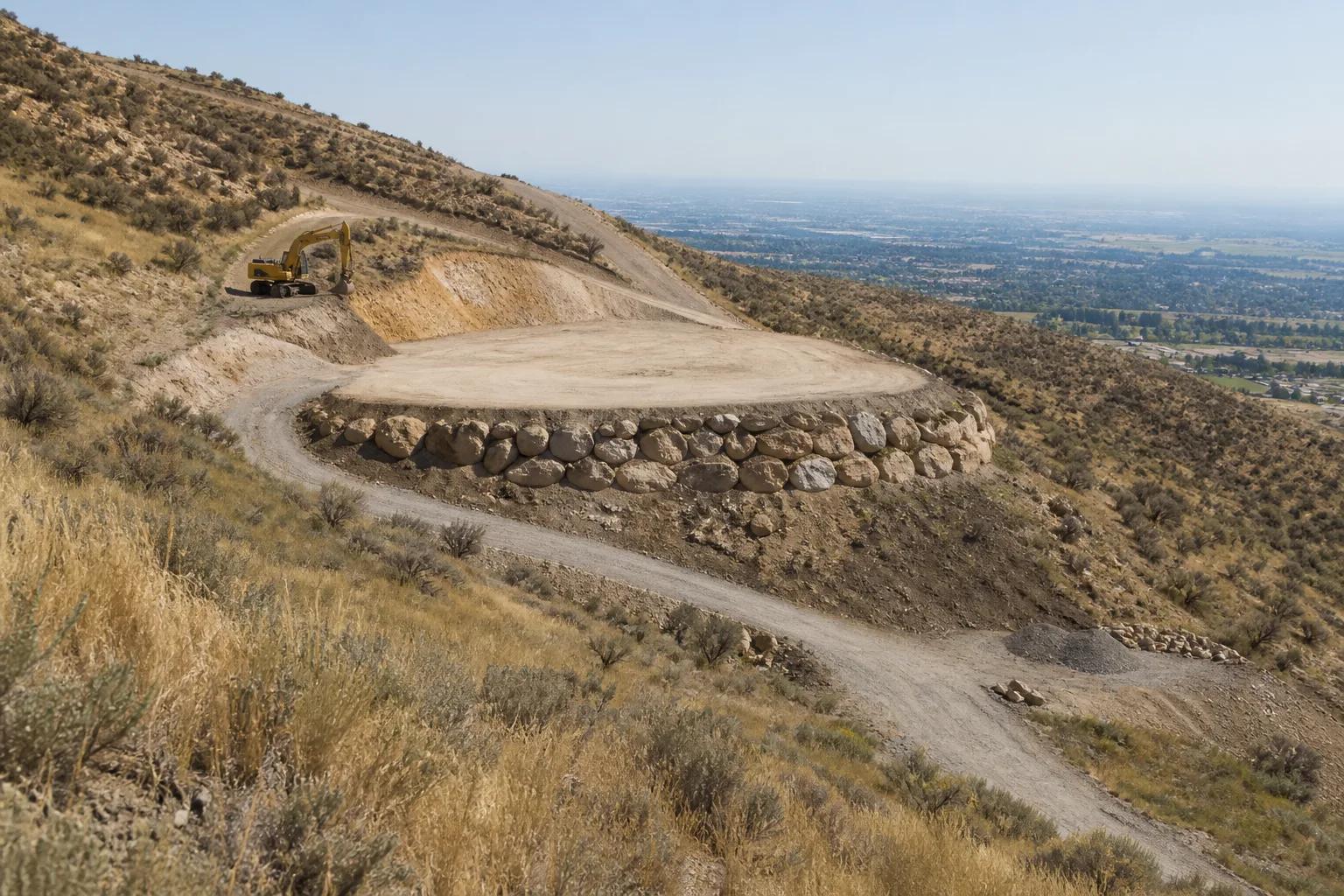
A foothills parcel costs more to build on for reasons that are all physical and all predictable, which means they can be budgeted rather than discovered. Slope is the first. Getting a level building platform out of a hillside means excavation, engineered retaining, and often a stepped or deepened foundation, and all three scale with how steep the ground is. Second is access: a driveway on a slope has to hold a grade the fire district will accept, which frequently means a longer route than the direct one and real structural work to hold it.
Third is what is under the surface. Geotechnical investigation is commonly required before the foundation can be engineered, and the report sometimes changes the foundation type. Fourth is wildland-urban interface: exterior materials, roof assemblies, vents, and defensible space around the structure all carry requirements that a valley-floor build does not.
Lots and land in the Eagle Foothills
On a foothills parcel, the buildable area is usually a small fraction of the acreage, and its location is decided by the driveway rather than by the view. The best outlook is often somewhere a driveway cannot reasonably reach at an acceptable grade. Have the access route and the building platform established before purchase, because a parcel where those two things do not resolve is not a building site regardless of what it costs.
Services are usually private: a well, a septic system sized to soils that may be thin or rocky, and frequently a power extension. That is the $80,000 to $150,000 rural site work band, and on a difficult foothills parcel it can sit at the top of it.
Our guide to buying land to build on covers the full diligence list, and a written lot evaluation at $950 to $3,500 documents it for a specific parcel before your inspection period closes.
The thing that catches people out here
The single most common foothills mistake is buying the view and discovering the access. Everything else on a sloped site is expensive but solvable with money. Access can be genuinely unsolvable if the grade, the geometry, or a neighbour's property makes a compliant driveway impossible. Establish the route first, in writing, before anything else about the parcel matters.
What a the Eagle Foothills build costs
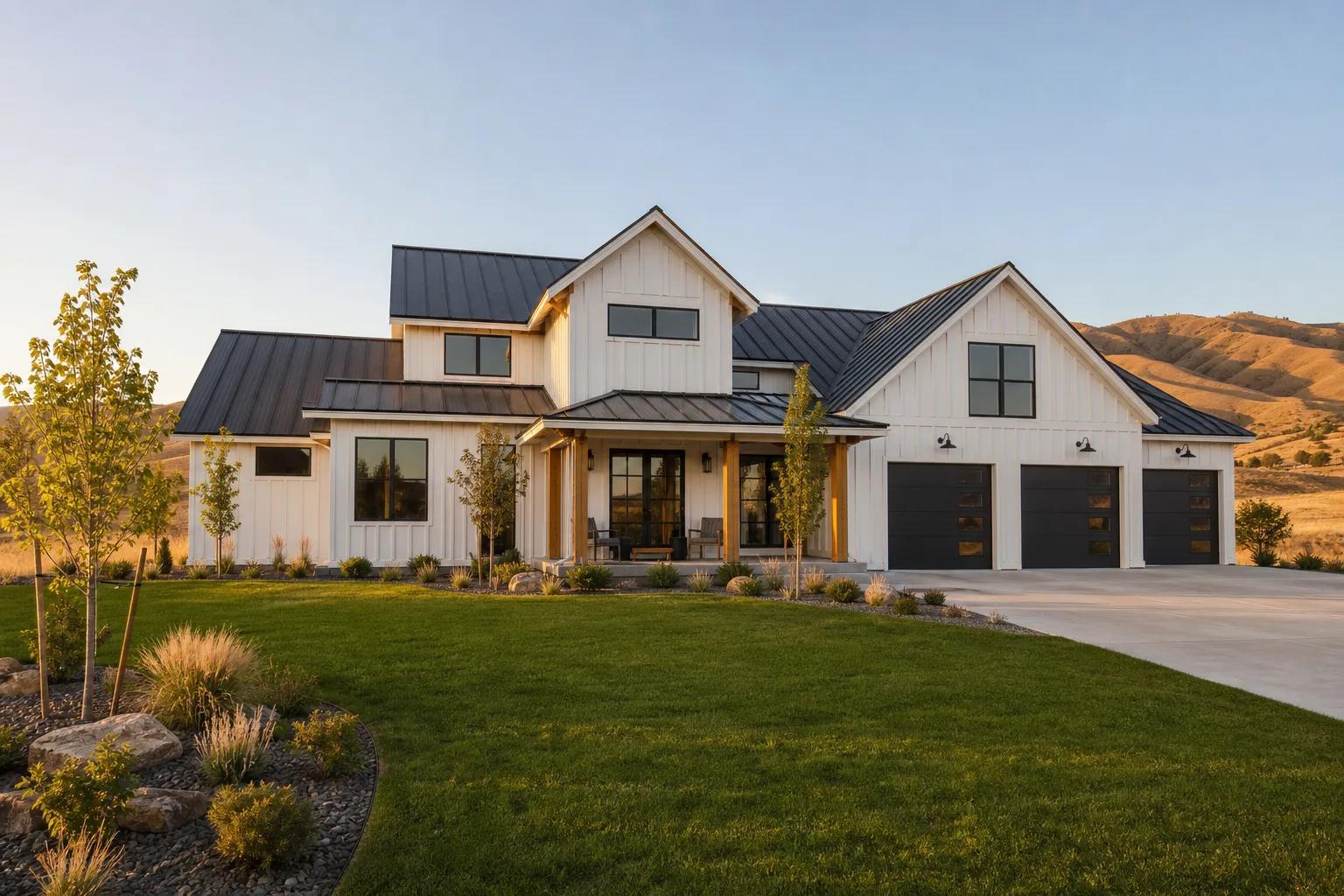
Expect above $450 per finished square foot for a foothills home with meaningful slope and high detail, against $250 to $400 on flat ground. Add $80,000 to $150,000 of site work for well, septic, driveway, and power. Design and engineering also run toward the upper end of the 5 to 12 percent band here, because the structural and geotechnical work is genuinely more involved than a valley-floor build.
For the full picture of what moves a construction budget, see the Boise home building cost guide, or run your size and finish level through the estimator for a starting range.
How we work in the Eagle Foothills
We handle design, engineering, permitting, and construction under one contract, which means one accountable team from the first drawing to handover. That includes submissions and inspections with the authority for your address, utility applications, and any separate septic approval with the health district serving the parcel. You get a line-item budget before we break ground, a published draw schedule, a written progress update every week, and a one-year workmanship warranty after possession. Our process guide walks through every stage in order.
Services relevant here: custom home building, semi-custom homes, build on your lot, and home plans and design. See also our eagle service area page and the Treasure Valley home building guide.
Start with the parcel
The fastest way to get a real answer about building in the Eagle Foothills is to tell us about the specific parcel, because that is what determines the site budget and frequently the plan. Send us the address or parcel number and we will tell you what we see, or start with the build cost estimator for a planning range.