The short answer
Expand section
The short answer
An impact fee is a one-time charge that helps pay for public infrastructure your new home adds demand to. A connection or meter fee pays to physically attach your house to a utility system. They are different charges, from different bodies, and both are set per jurisdiction and revised over time. That last point is why this article does not contain a dollar figure for any named agency. Anyone who quotes you a precise impact fee for a specific city from memory is quoting a number that may already be out of date, and a low number in your budget is worse than an honest "we will confirm it". What we can do is explain the categories clearly so you know what to ask for and roughly how many separate bills to expect. This article is part of our guide to buying land to build on in the Treasure Valley.
What impact fees actually pay for
Expand section
What impact fees actually pay for
Impact fees exist because a new household uses public systems that somebody already built and somebody has to expand. Another house on a street means more trips on the road network, more demand on parks, more calls on fire and emergency services, and potentially more children in schools. Rather than fund all of that from existing taxpayers, jurisdictions collect a one-time charge from new construction toward the capacity that growth requires. Whether you think that is fair is a separate conversation from whether it is real, and in a valley growing as steadily as this one, it is very real. The practical point for a homeowner is that an impact fee buys you nothing you can see. There is no pipe, no meter, no inspection attached to it. It is a contribution to a system, and it is typically due around permit issuance, which is early in the project when your money is already committed elsewhere.
Which bodies can levy a fee on one house
Expand section
Which bodies can levy a fee on one house
A single new home routinely triggers charges from four or five separate entities, and they do not coordinate with each other or send you one bill.
| Body | Typical basis for a charge | What it funds |
|---|---|---|
| City | Impact fee at permit, where the parcel is inside city limits | Parks, fire and police facilities, general city capacity |
| Highway district | Impact fee based on trips generated by a dwelling | Road capacity and intersection improvements |
| School district | Impact fee or equivalent, where adopted | School facility capacity |
| Sewer or water district | Connection or capitalisation fee, plus a meter fee | Treatment and distribution capacity, and your physical hookup |
| County or city building department | Permit and plan review fees | The cost of reviewing and inspecting your project |
Which of these apply depends entirely on where the parcel sits. A lot inside Boise city limits faces a different combination than a parcel in unincorporated Ada County or one served by a district in Canyon County. That is why we look this up by parcel number rather than by county.
Impact fee versus connection fee versus meter fee
Expand section
Impact fee versus connection fee versus meter fee
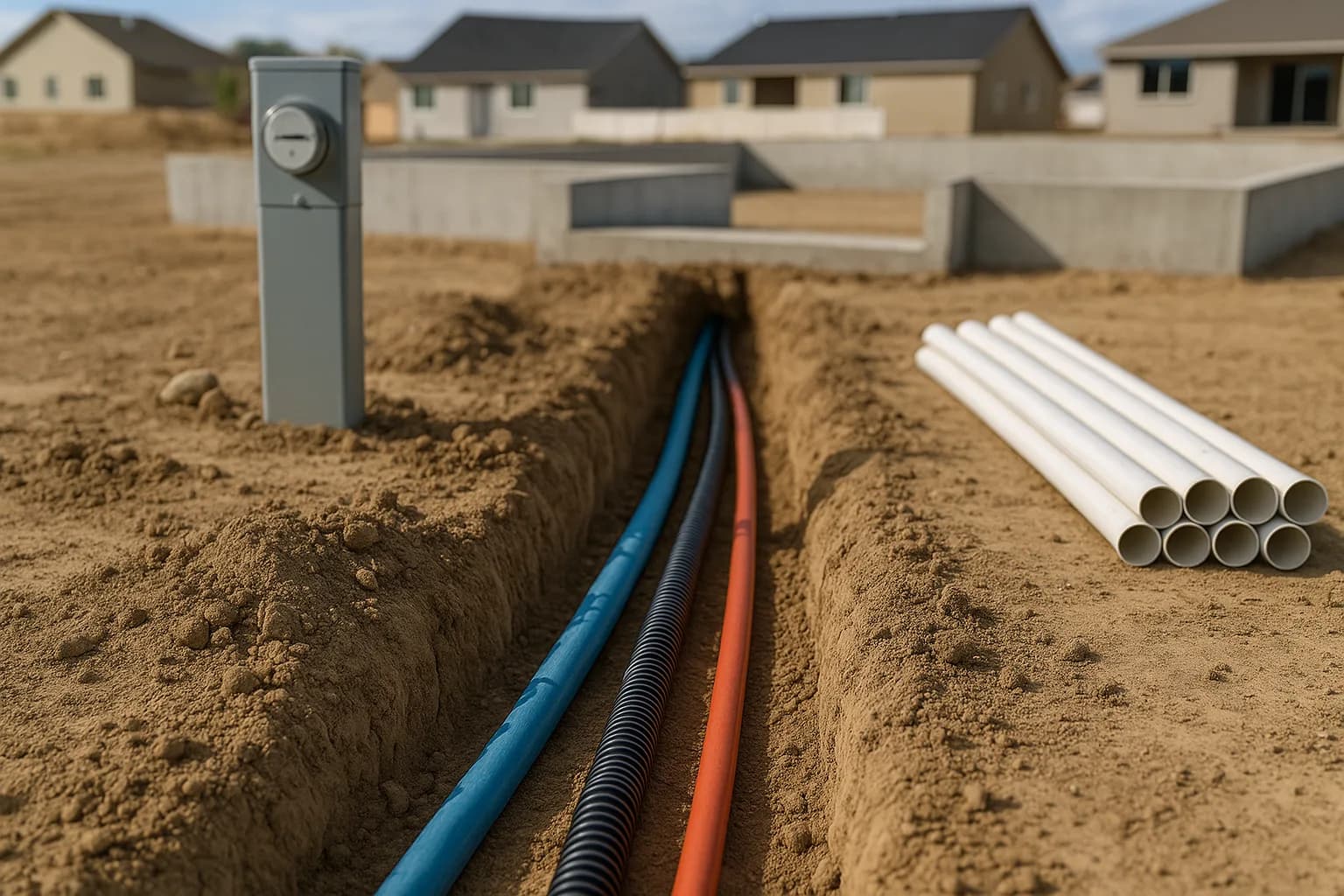
The clearest way to hold these apart is to ask what the money buys. An impact fee buys capacity in a public system that serves everyone, and you never touch it. A connection fee, sometimes called a hookup or capitalisation fee, buys your house a place in a specific utility system, usually water or sewer, and reflects the share of that system's capacity your household will occupy. A meter fee buys the physical meter and its installation, which is a piece of equipment on your property. Then there is the actual physical work of running the service line from the main to the house, which is construction rather than a fee and is part of your site work. Four different things, frequently confused, sometimes billed by three different offices. When a seller or an agent tells you fees on a parcel are "about" a number, ask which of these four they are describing. Usually they only know about one of them.
Permit and plan review fees are separate again
Expand section
Permit and plan review fees are separate again
Building permit and plan review fees are not impact fees, and they behave differently. These cover the jurisdiction's own cost of reviewing your drawings, issuing the permit, and inspecting the work as it proceeds. They are usually calculated from the valuation or size of the project rather than as a flat charge per dwelling. Permits route through Ada County for Boise, Meridian, Eagle, Kuna, and Star, or Canyon County for Nampa, Caldwell, and Middleton, and the two counties use different portals with different review cadences. Cities within those counties often handle their own review for parcels inside city limits. On a rural parcel you will also have a separate septic permit through Central District Health, which runs on its own track, as described in what a well and septic system costs in Idaho. We handle permits, plan review, engineering, and utility applications in-house for Ada and Canyon County, mostly so these applications start in the right sequence rather than in the order someone remembers them.
Why we do not publish the amounts
Expand section
Why we do not publish the amounts
Fee schedules are adopted locally, revised periodically, and differ between adjacent jurisdictions, so a published number would be wrong somewhere and out of date eventually. We think publishing a confident figure would be worse than useless, because a homeowner would carry it in their budget for months and then discover a gap at permit. Fees also depend on details of your specific project, including which districts serve the parcel, whether the lot is annexed, the size of the meter you require, and in some cases the dwelling's characteristics. So we treat this the way we treat well depth: it is a known unknown with a known method of resolution. During feasibility we contact each applicable agency, get the current schedule that applies to your parcel, and put real numbers in the budget before anyone breaks ground. A line-item budget with confirmed fees is worth considerably more than an early estimate that feels precise.
Serviced lots and rural parcels trade one cost for another
Expand section
Serviced lots and rural parcels trade one cost for another
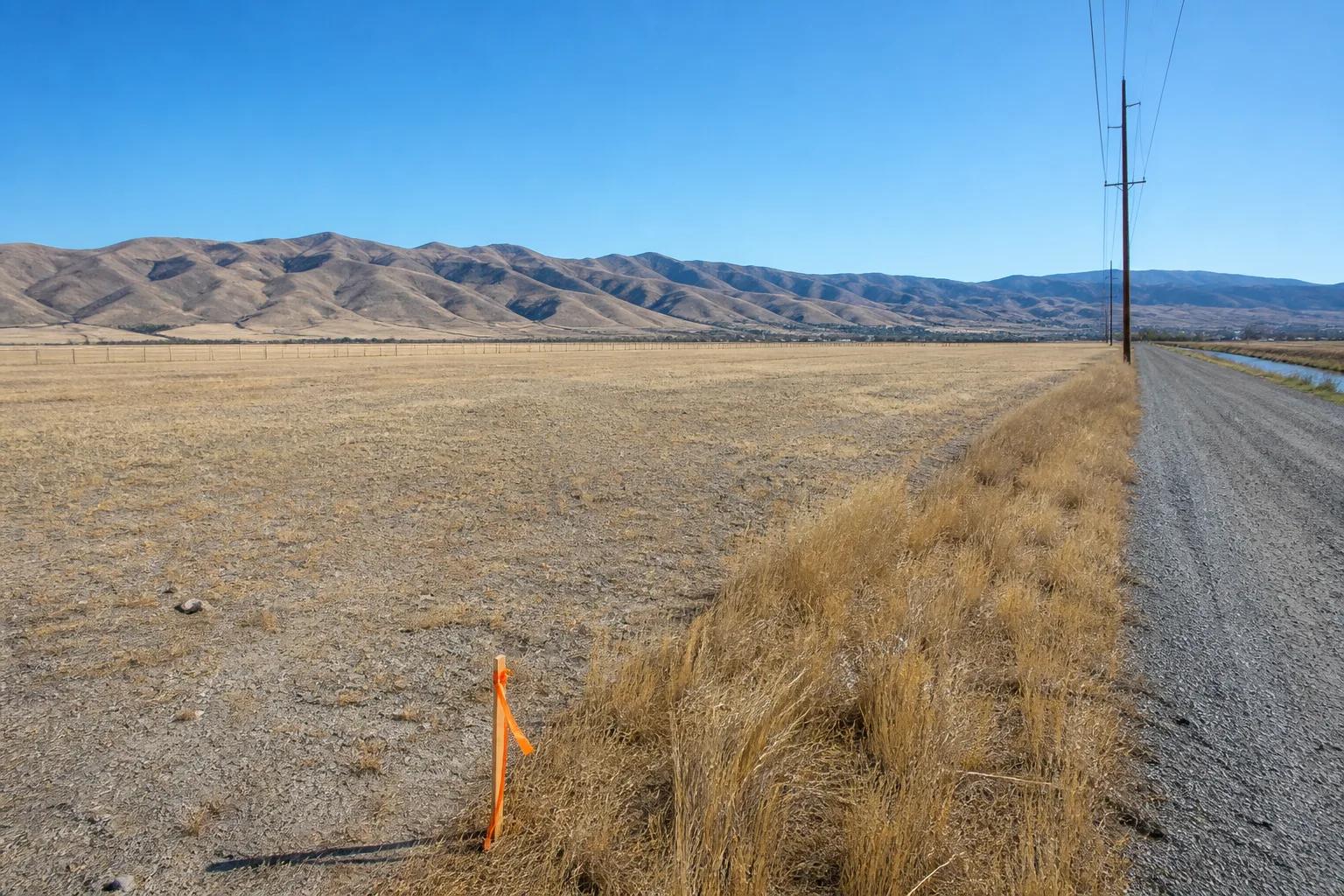
Rural parcels usually face fewer agency fees and much higher infrastructure cost, which is a trade that generally goes the wrong way for the buyer. On a serviced lot inside a city, you will pay more separate fees to more separate bodies, but the road, the mains, and the stubs already exist and somebody else built them. Site work commonly runs $25,000 to $50,000. On a rural parcel there is no sewer connection fee because there is no sewer, and no meter fee because there is no meter, but you are building your own water and waste systems and often your own access. That site work commonly runs $80,000 to $150,000 before a foundation is poured, excluding land. So the parcel with no impact fees is usually the expensive one. Run both scenarios with real numbers before deciding which kind of lot fits your budget, and use our lot evaluation checklist to make sure the comparison is complete.
When these charges land in your budget
Expand section
When these charges land in your budget
Most of them fall early, near permit issuance and service activation, rather than spread across the build. That timing matters more than homeowners expect. The start of a project is already dense with cost: design and engineering typically run 5 to 12 percent of construction cost, roughly $9,000 to $35,000, and site work is front-loaded by definition. Adding several thousand dollars of fees to the same window can strain cash flow even on a project that pencils out overall. Construction financing usually accommodates this, but the fees need to be in the budget from the beginning so they are drawn for rather than found. A published draw schedule and a line-item budget before we break ground are what keep this from becoming a scramble. If a builder's early number has no fee line in it at all, that is not a cheaper builder, it is an incomplete budget.
What to ask, and who to ask
Expand section
What to ask, and who to ask
Ask each body directly, by parcel number, and get the answer in writing. For the city or county: what impact fees apply to a new single-family dwelling on this parcel, and when are they due. For the highway district: what road impact fee applies. For the school district: whether a fee applies in this attendance area. For the water and sewer provider: what connection or capitalisation fee applies, what meter sizes are available and what each costs, whether the parcel is eligible to connect, and where the connection point is. For the building department: how permit and plan review fees are calculated. Six phone calls or portal lookups, and you will know more about the parcel's real cost than most buyers do at closing. If the parcel is not yet under contract, this is also a fast way to find out whether a lot is served at all, which connects back to how to tell if a lot is actually buildable.
A note on foothills and outlying parcels
Expand section
A note on foothills and outlying parcels
The farther a parcel sits from established service, the more the cost shifts out of fees and into construction, and construction is the more expensive column. A foothills lot may sit inside a city and still require long service runs through difficult ground, so you pay both the agency charges and the extended infrastructure. Fire access requirements can add driveway cost, and wildland-urban interface considerations can add to the house itself. Those drivers are covered in what it costs to build in the Boise foothills. The general principle holds across the valley: fees are the visible, quotable part of connecting a home to public systems, and they are usually the smaller part. The physical work of getting service to the house is the number worth investigating hardest.
Get the real numbers for your parcel
Expand section
Get the real numbers for your parcel
We confirm every applicable fee during feasibility and put it in a line-item budget before we break ground, so nothing arrives at permit that was not planned for. A written lot evaluation runs $950 to $3,500 and includes the fee and utility research along with access, zoning, soils, and septic feasibility. If you already own the land, our build on your lot service starts from the same research. To get a rough sense of the overall project before that, run your numbers through our cost calculator and treat fees as a line still to be confirmed.