What changes when you cross the county line
Expand section
What changes when you cross the county line
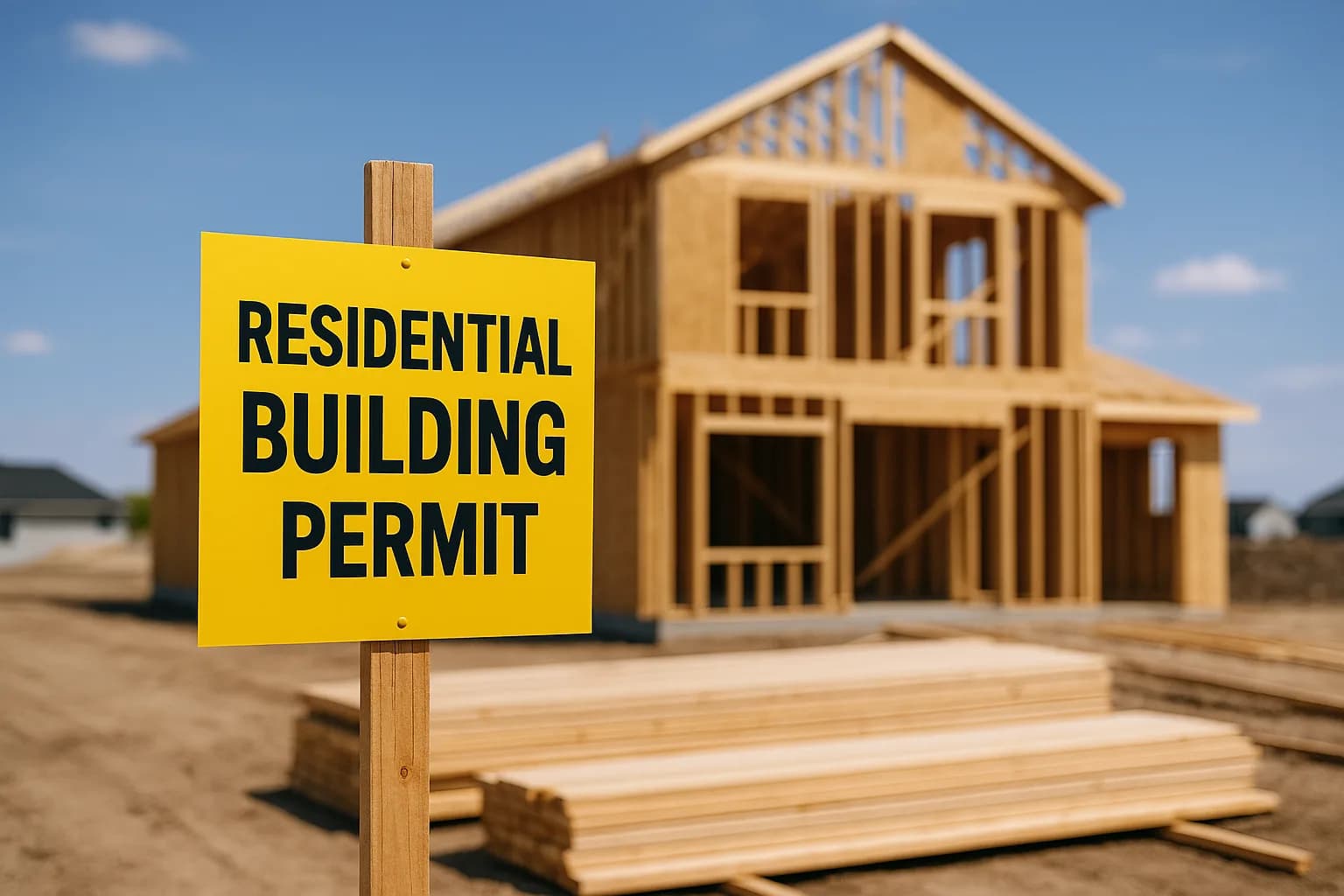
The house is the same. The paperwork path, the fee structure, and the list of agencies you deal with are not. Ada County covers Boise, Meridian, Eagle, Kuna, and Star. Canyon County covers Nampa, Caldwell, and Middleton. Both apply essentially the same building code to the same kind of house, so a plan that works in Meridian works in Nampa. What differs is the submittal portal, the review cadence, how impact fees are assembled, and which outside agencies have a say.
We build on both sides of the line and handle permitting in-house for both, so this is a practical comparison rather than a preference. It pairs with our guide to what a new-home permit contains and sits inside the wider Boise home building process guide.
The county line is not the real dividing line
Expand section
The county line is not the real dividing line
Your jurisdiction is your city, or the county if your parcel is unincorporated, and that distinction affects you more than the county name. A lot inside Meridian city limits permits through Meridian. A lot two miles outside them, still in Ada County, permits through the county. The requirements, the fees, and the review staff are different in each case, even though both addresses say Ada County.
This trips people up when they compare notes with a neighbor. Two friends both building in Canyon County can have genuinely different experiences because one is inside Nampa and the other is on an unincorporated parcel between Caldwell and Middleton. The first question we ask about any lot is not which county but which jurisdiction, and whether the parcel is inside a city's area of impact, which can add a layer of review even outside city limits.
Separate portals, separate habits
Expand section
Separate portals, separate habits
The two counties use different permitting systems, and the cities inside them often use their own on top of that. Practically, that means different account setups, different document naming and formatting requirements, different resubmittal mechanics, and different ways of communicating corrections.
None of this is difficult once you have done it. All of it is friction the first time. A set that uploads cleanly in one portal can be rejected in another for a formatting reason that has nothing to do with the design. This is the least interesting difference between the counties and one of the most common causes of a week lost for no good reason, which is a fair description of a lot of administrative work.
Review cadence, and why we will not give you a day count
Expand section
Review cadence, and why we will not give you a day count
Ada and Canyon jurisdictions review on different cadences, and neither publishes a number we would repeat to you as a promise. Queues move with volume. A submittal in a busy stretch behaves differently from the same submittal in a quiet one, and that is true in both counties.
So we plan in weeks, we build float into the schedule around plan review, and we start the clock as early as the design allows. What we can actually control is the quality of the submittal. A complete, coordinated set that draws no corrections beats a fast jurisdiction with a set that comes back twice. If you want a builder to make you feel good with a specific turnaround figure, plenty will. We would rather tell you where the uncertainty sits and how we manage around it. Our post on how long a Boise build takes shows where this sits in the overall calendar.
Impact fees are structured differently
Expand section
Impact fees are structured differently
Impact fees are set by jurisdictions and service districts, not by counties, and the way they are assembled differs on each side of the valley. The number that ends up on your invoice can be a stack of separate items from a city, a highway district, a school district, a fire district, and a sewer or water district, and which of those apply depends on the address.
We do not publish fee amounts here for a good reason: they are revised periodically, they vary by house size and valuation, and a number written into an article ages badly. What we do is pull the current published schedules for your parcel during pre-construction and put the real figures in your line-item budget before you sign anything. If a builder gives you a lump allowance for fees without showing you which districts it covers, ask them to itemize it. Impact fees and utility connections goes deeper on what these charges are for.
Highway districts, irrigation, and the other agencies
Expand section
Highway districts, irrigation, and the other agencies
Outside the building department, the agency map differs enough that a Canyon County build can involve a different cast entirely. Public roads and driveway approaches in Ada County are handled by a single county-wide highway district, which makes that piece consistent across Boise, Meridian, Eagle, Kuna, and Star. In Canyon County, road authority is divided among separate highway districts and city engineering departments, so which office approves your approach depends on where the parcel sits.
Irrigation is the other one people do not see coming. Much of the valley floor in both counties carries irrigation easements, laterals, and delivery obligations from agricultural land that was subdivided. An irrigation district may need to review a site plan, and an easement running through the middle of a parcel can move a house or a driveway. This is a due diligence item, not a permitting surprise, provided somebody looks before you buy.
Rural septic goes to Central District Health in both
Expand section
Rural septic goes to Central District Health in both
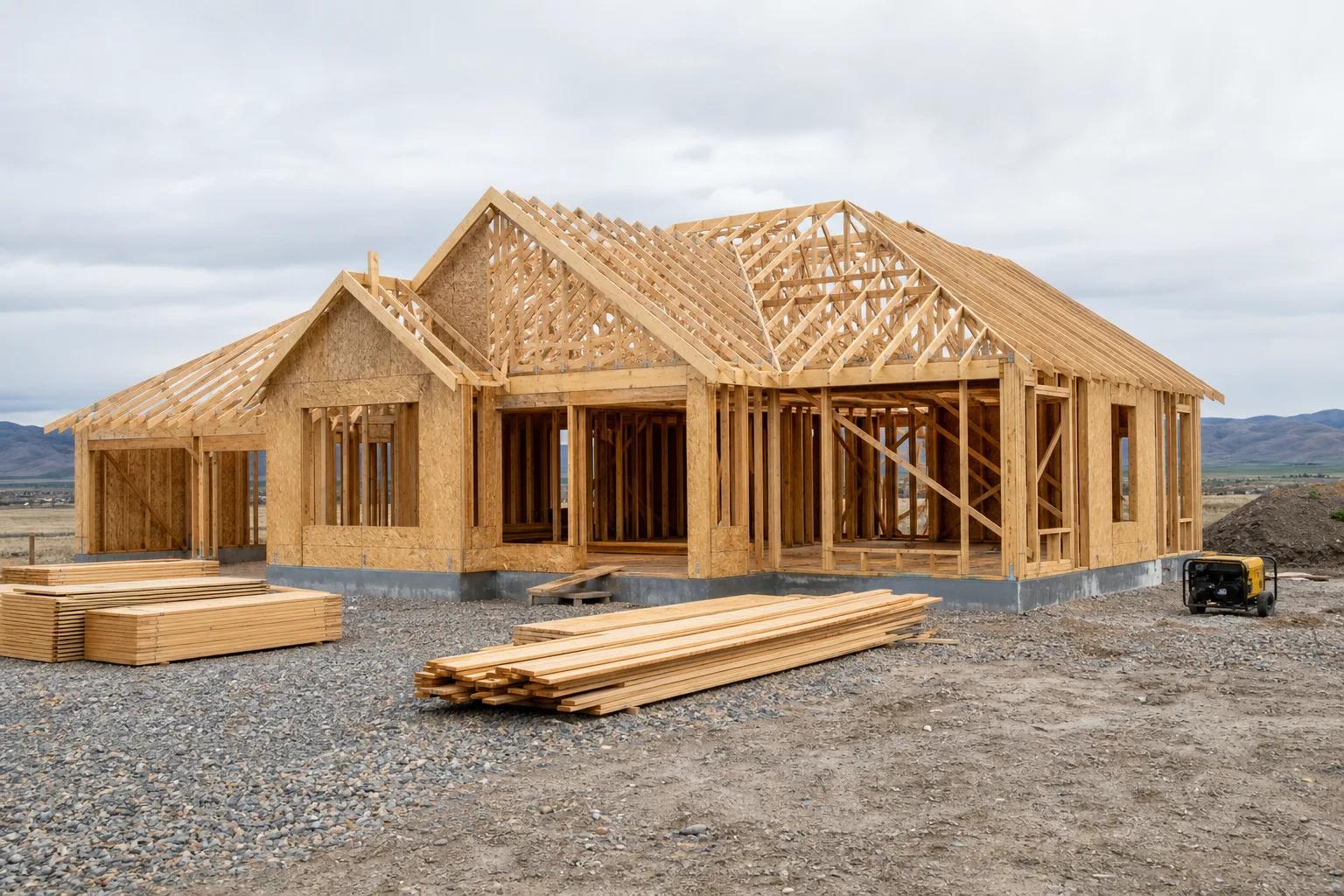
If your parcel is not on city sewer, the septic system is permitted through Central District Health regardless of which county you are in. That application depends on a soil evaluation and an engineered design, and it runs on its own timeline in parallel with the building permit.
The practical consequence is sequencing. A site plan cannot be finalized without a septic layout, because the drainfield, the replacement area, and their required separations from the well, the house, and property lines all constrain where the house can sit. Start the septic track late and you have a building permit application waiting on a health department approval, which is a genuinely avoidable delay. Our post on what a well and septic system costs in Idaho covers the numbers.
Where the real cost difference shows up
Expand section
Where the real cost difference shows up
The meaningful cost difference between the two counties is usually site conditions, not permitting. Construction cost per finished square foot is driven by the house you build. A serviced subdivision lot typically carries $25,000 to $50,000 of site work. A rural parcel needing a well, a septic system, and access commonly runs $80,000 to $150,000 before a foundation is poured, excluding land.
Canyon County has proportionally more rural and agricultural parcels, so that second scenario comes up more often there. Ada County has the foothills, where slope, access, geotechnical requirements, and wildland-urban interface considerations push costs the other direction. Neither county is simply cheaper. The parcel is what is cheap or expensive, and two lots in the same subdivision can differ by tens of thousands once you account for grade, soils, and utility runs.
Utilities are an address question, not a county question
Expand section
Utilities are an address question, not a county question
Who provides your water, sewer, power, and gas depends on the specific address, and the pattern is different enough between the two counties that assumptions travel badly. Inside city limits you are usually on a municipal water and sewer system. Outside them you may be on a water or sewer district, on a shared community system, or on a private well and septic with nothing municipal at all.
Each of those has different application steps, different connection requirements, and a different lead time for getting service to the house. A power extension to a rural parcel is coordinated with the utility on their construction schedule, not yours, and that schedule can be the longest single item on a rural project. This is the piece of due diligence most often skipped by buyers, because a listing that says power is at the road does not tell you how far the road is from where the house will sit.
What does not differ at all
Expand section
What does not differ at all
Structural engineering, energy compliance, the inspection sequence, and the certificate of occupancy work the same way on both sides. So does the underlying logic of plan review: zoning, structure, life safety, and energy. So does the requirement that nothing gets covered before it is inspected.
This is worth saying because the differences above can make it sound as though building in Canyon County is a different exercise. It is not. It is the same build with a different address book. What actually determines whether your permit goes smoothly is whether the set was complete when it was submitted, and that has nothing to do with the county.
The trades are also largely shared across the valley. The framers, plumbers, electricians, and concrete crews we work with in Meridian are frequently the same ones working in Nampa the following month, which means quality and availability do not change at the county line either. What does change with distance is drive time, and on a parcel far from the population center that can quietly affect scheduling and what a subcontractor is willing to bid.
If you are choosing between lots in different counties
Expand section
If you are choosing between lots in different counties
Choose the lot, not the county, and price the site work before you commit to either. The permitting differences are real but manageable, and they are not a good reason to prefer one address over another. The site conditions, the utilities, the easements, and the fee stack are the things that will actually change your budget, and all four can be read before you buy.
We build in Boise, Meridian, Eagle, Kuna, Star, Nampa, Caldwell, and Middleton, and handle permits in-house across both counties. See the areas we build in, or bring us a parcel you are considering and we will tell you what it will take to permit and service it. Get in touch and we will look at it with you before you write an offer.