Selections are a schedule problem first
Tap to expand
Selections are a schedule problem first
The reason finish selections wreck budgets and calendars is that people treat them as a taste exercise when they are a logistics exercise with taste attached. Every choice has a date it is due, set by when a trade needs the information or when a supplier needs the order. Miss the date and you have not just made a late decision, you have stopped a sequence that other trades are queued behind.
The good news is that this is solvable with a schedule and some early discipline. The bad news is that the schedule is not negotiable, because it is derived from the build. This article covers when each decision is due, how allowances behave, and where finish money is genuinely worth spending. It is part of our Boise home building process guide.
The selection schedule
Tap to expand
The selection schedule
A selection schedule is a dated list of every decision you owe, working backward from the construction sequence, and it should exist before framing starts. Ours lists the category, the date it is due, the allowance carried for it, and what the decision blocks if it is late. That last column is the one that changes behavior.
Without it, selections arrive as a stream of questions from whoever needs an answer that week, which is exhausting and produces incoherent results. With it, you can see in one place that the tile decision is due in three weeks, that it affects the shower niche framing, and that nothing else is competing for your attention that month. It also lets you front-load the decisions you care about most while you still have energy for them.
What has to be decided before framing
Tap to expand
What has to be decided before framing
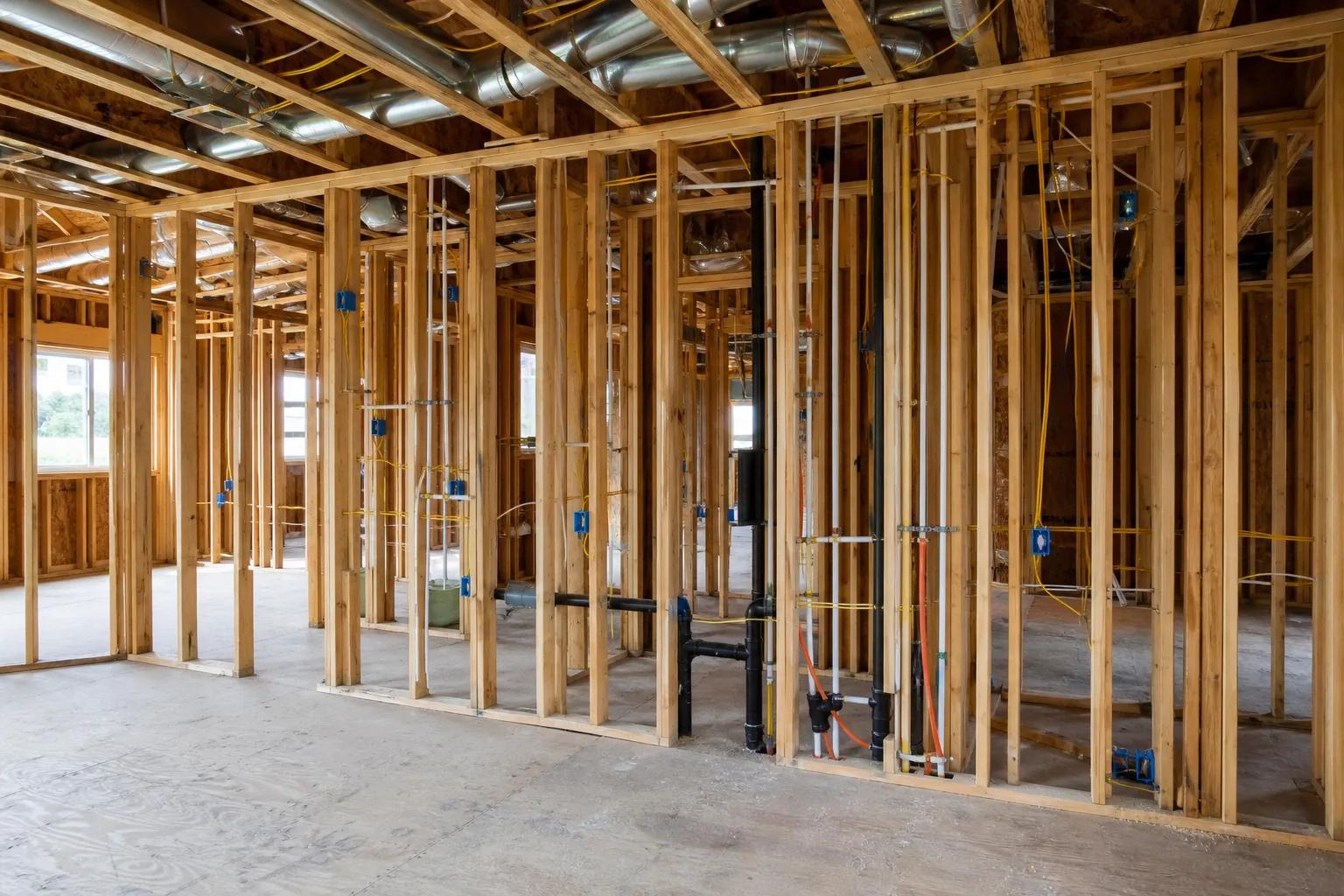
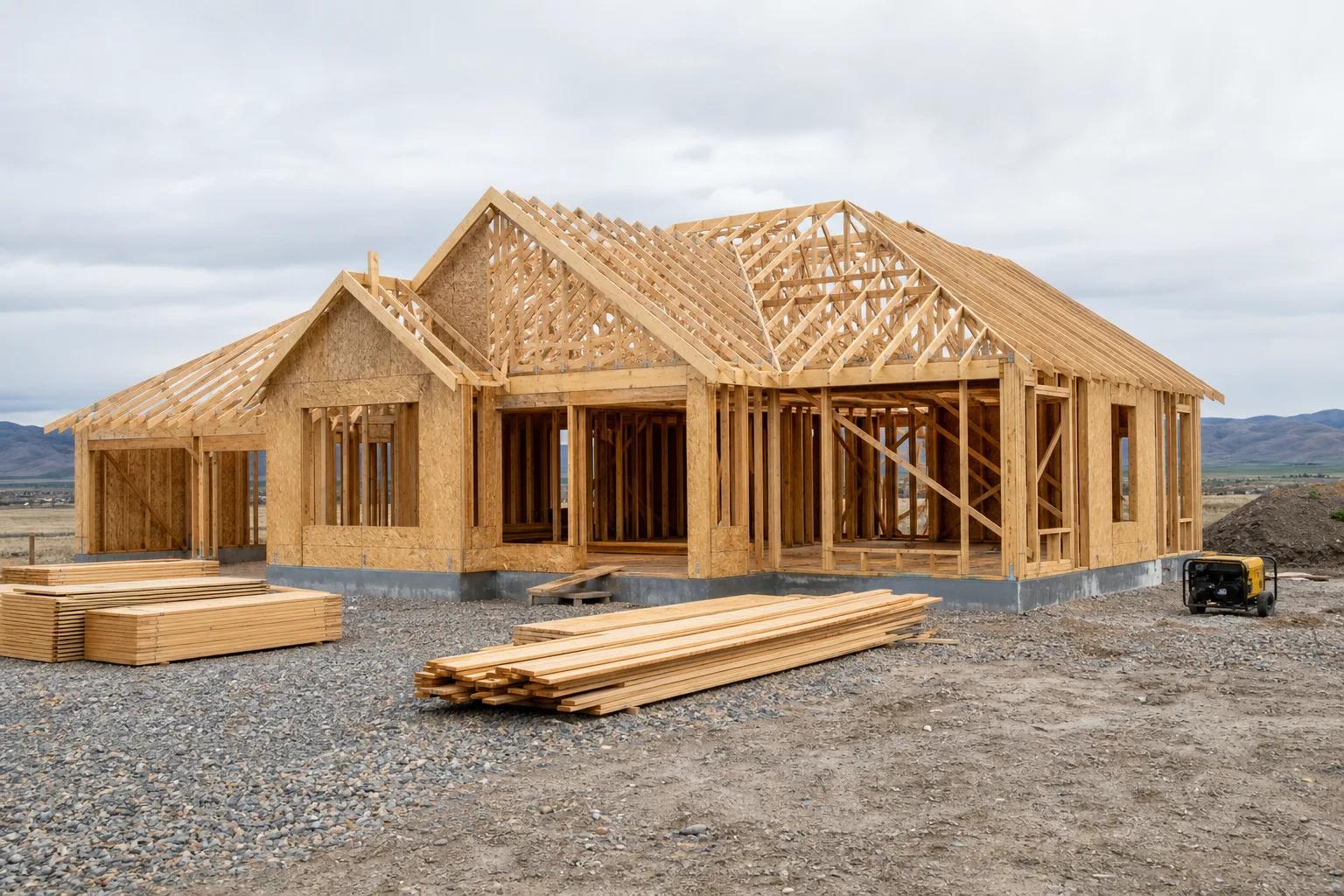
Anything with a dimension is a framing decision, not a finish decision, even when it feels like a finish. This is the category people underestimate, because a bathtub or a range hood sounds like something you pick later.
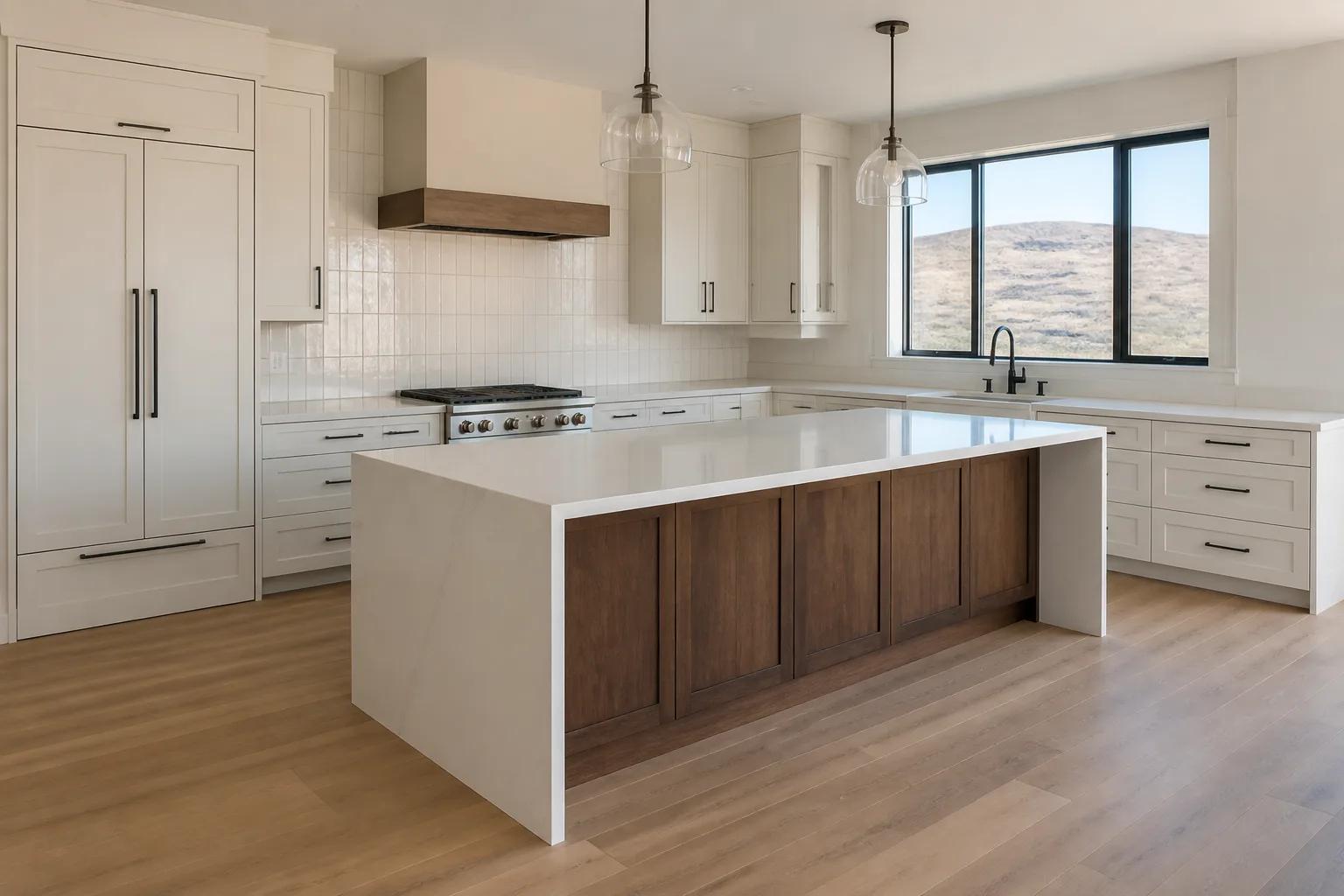
Window sizes and locations. Exterior door types and openings. Ceiling heights and any coffer, tray, or vault. Stair configuration. Fireplace type and location, because a direct-vent unit needs framing and a chase. Tub and shower type, since a freestanding tub, a drop-in, and a curbless shower all have different rough plumbing and framing. Appliance sizes, because a 48 inch range and a 36 inch range are different cabinet runs and different hood framing. The location of anything that needs a gas line. If those are not settled before framing, you are either guessing or changing later, and changing later is the expensive option.
What has to be decided before drywall
Tap to expand
What has to be decided before drywall
Everything electrical, everything plumbed, and everything with a long lead time is due before the walls close. Outlet and switch locations, lighting layout including cans, pendants, and sconces, low voltage and data, ceiling fan boxes, and any speaker or wiring you want in the walls.
Plumbing fixtures have to be selected far enough ahead that rough-in heights and valve types are right. A wall-mounted faucet is a rough-in decision. A shower system with body sprays is a rough-in decision. And cabinets, which are installed months after drywall, are typically ordered around this point because of manufacturing lead times. This is the moment where the sequence stops being intuitive: you are choosing things now that you will not see for a season. Our stage-by-stage walkthrough shows where these deadlines fall.
What can genuinely wait
Tap to expand
What can genuinely wait
Paint colors, cabinet hardware, mirrors, closet systems, and most light fixtures can be decided during construction rather than before it. These are the choices with short lead times and no upstream dependencies, and they are the ones most likely to benefit from seeing the actual space.
Paint in particular is better chosen once there is drywall and daylight in the room, because a color that looked right on a chip in a showroom can be entirely wrong under north light in a Boise winter. Landscape design can also wait, within reason, as long as the budget line for it is real and the irrigation and grading rough work has been planned. What cannot wait, even though it feels late-stage, is anything that has to be ordered.
Long-lead items and why early is on time
Tap to expand
Long-lead items and why early is on time
A long-lead item is anything whose supply schedule is long enough to affect construction, and choosing one on time usually means choosing it months before it is installed. Windows, cabinets, specialty tile, custom doors, certain plumbing fixtures, and some appliances are the recurring offenders.
The failure mode is subtle. You make a selection on the day it is requested, feel entirely on top of it, and then discover the item ships in fourteen weeks and the install slot was in ten. Nothing about your decision was late in ordinary terms; it was late in supply chain terms. This is why a good builder asks for certain decisions embarrassingly early and then does nothing visible with them for a while. If you want a specific item badly, tell us early and we will build the order date into the schedule rather than discovering the conflict later.
How allowances actually work
Tap to expand
How allowances actually work
An allowance is a placeholder for a category you have not chosen yet, and its only job is to be realistic. When you select, the actual cost replaces the allowance and the difference gets credited or billed. That mechanism is fine. What is not fine is an allowance set low enough that no real product meets it.
This is worth being blunt about, because it is the most common way a bid misleads people. A builder who wants the lowest number on paper can set the tile, plumbing, lighting, and flooring allowances below what those categories actually cost in this market. The bid wins. Then every single selection generates an overage, the budget grows through no fault of yours, and the builder points to the change orders. We set allowances at what things actually cost here, which sometimes means our number is higher than a competitor's for the identical house. Compare the allowance schedules line by line before you compare totals. Why home building bids vary covers the rest of that comparison.
Where finish money is worth spending
Tap to expand
Where finish money is worth spending
Spend on what is permanent, structural, or genuinely disruptive to change later. The test is simple: how hard would this be to redo in ten years with the house occupied?
| Worth the money | Why |
|---|---|
| Windows and doors | Permanent, affect comfort and energy every day, and replacing them later is a major project |
| Insulation and air sealing | Buried in the walls forever, and the difference is felt in every room in July and January |
| Cabinet construction | Box quality, drawer hardware, and joinery outlast three door styles |
| Plumbing valves and rough-in | Behind tile; changing a valve later means opening a wall |
| Flooring in main living areas | Continuous, high-traffic, and disruptive to replace with furniture in the house |
| Roof and exterior envelope | Protects everything else and is not something you upgrade casually |
Performance upgrades over code minimum commonly run 3 to 8 percent of construction cost, or roughly $20,000 to $55,000, and unlike a finish choice they keep returning value after the style has moved on.
Where finish money quietly disappears
Tap to expand
Where finish money quietly disappears
Money vanishes fastest into things that are easy to change later, invisible to daily life, or bought to impress a room you rarely use. We say this knowing it argues against a bigger contract.
The recurring examples: premium tile in a guest bathroom nobody uses, an upgraded faucet on a laundry sink, decorative lighting bought before the room exists and later replaced, a stone accent wall that dates faster than anything else in the house, and cabinet upgrades in a walk-in pantry behind a closed door. None of these are wrong if you want them and the budget is real. They are wrong when they consume the money that should have gone into windows or insulation, because that trade is very hard to reverse.
The other quiet drain is the small upgrade repeated across the house. Twenty dollars more per light fixture, forty more per faucet, three dollars more per square foot of tile, each perfectly reasonable, together a five-figure change nobody consciously made.
Managing the volume of decisions
Tap to expand
Managing the volume of decisions
A custom home requires hundreds of selections, and the way people lose control is by treating each one as equally important. Set the whole-house palette first: cabinet finish, primary countertop, main flooring, wall color, and metal finishes. Then let every room-level decision be constrained by that palette rather than reopened against it.
Group decisions into scheduled sessions instead of answering them one at a time by text at seven in the evening. Bring the person who shares the house to the sessions that matter, because a selection made alone and revisited later costs the same as any other change. And give yourself permission to make some choices quickly. The interior door style matters less than you think, and the energy you save there is energy available for the kitchen.
Getting a realistic finish budget
Tap to expand
Getting a realistic finish budget
The most useful thing you can do before selections start is to know what your finish level actually costs, in this market, for the house you are planning. Custom homes here commonly plan at $250 to $400 per finished square foot excluding land, and where you land inside that band is largely a finish and complexity question rather than a size question.
Our cost calculator will get you a planning range in a few minutes, and how to budget for a new home covers how to hold that number once the selections start. The custom home design guide explains which of these decisions belong at schematic design rather than at the selections table, and how allowances work in a new home contract is worth reading before you sign anything with an allowance in it. If you would rather talk it through against a specific plan and a specific lot, tell us about the project and we will do that instead.