The honest answer
Tap to expand
The honest answer
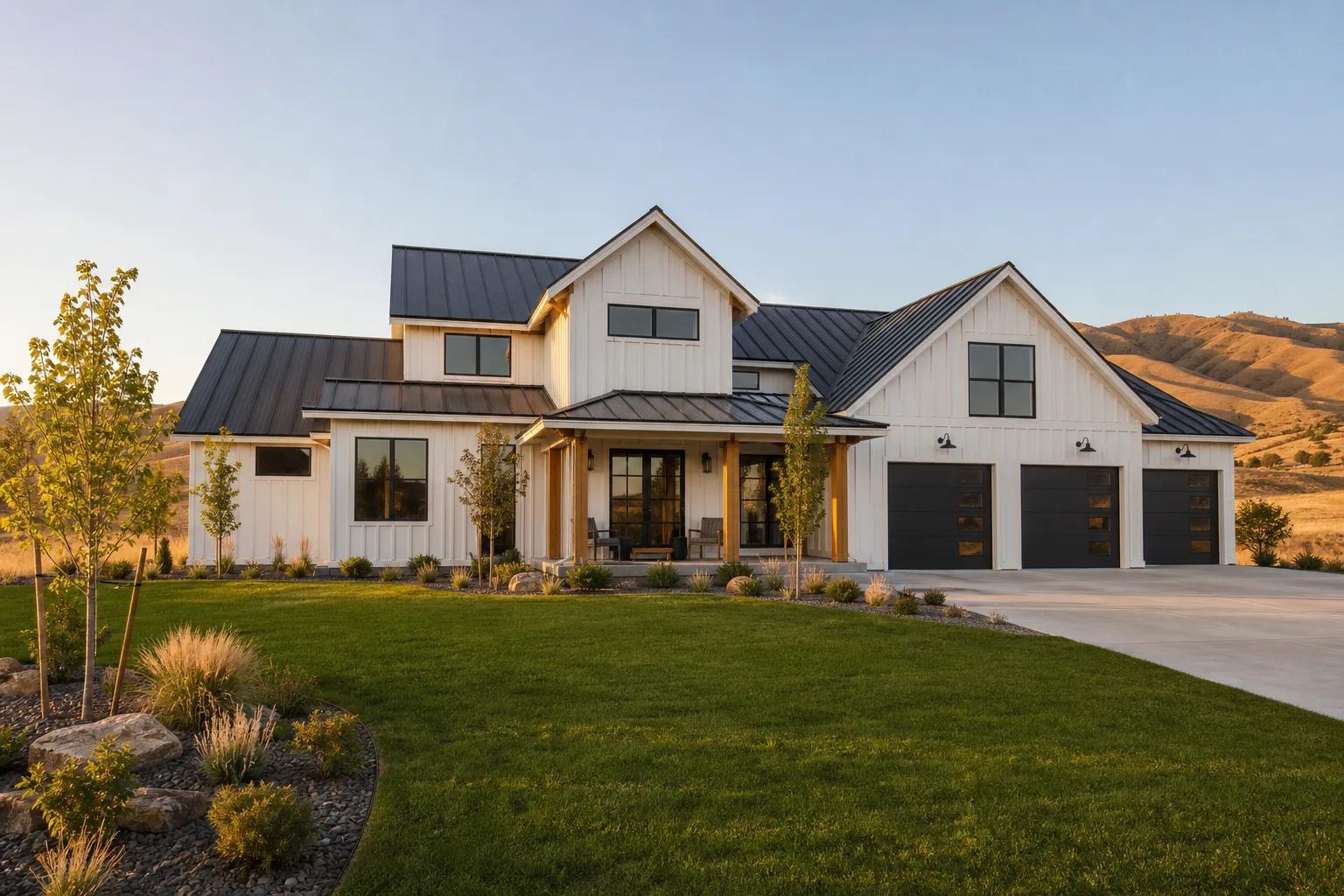
Buying an existing Treasure Valley home is usually faster, simpler, and cheaper than building the same house; building gets you a house that is actually yours. We build houses for a living, so read the rest of this with appropriate suspicion. We are writing it anyway because we would rather someone worked out early that buying suits them than spent four months in design with us and reached the same conclusion the expensive way. This article is part of our Boise home building cost guide, and it is meant to help you make the decision rather than to push you toward one.
Total cost
Tap to expand
Total cost
On a like-for-like basis, buying generally wins on price, because a resale home was built at yesterday's costs and you are paying today's to build. A custom home in the Boise area runs $250 to $400 per finished square foot, excluding land, which puts a 2,400 square foot house at $600,000 to $960,000 before you buy the dirt. Add land, add site work at $25,000 to $50,000 on a serviced lot or $80,000 to $150,000 on a rural parcel, and add design and engineering at 5 to 12 percent of construction cost.
The comparison you should actually run is not build cost against a market average. It is your all-in build number against the asking prices of the specific existing homes you have viewed and would genuinely live in. Then adjust the resale figure for what you would need to change: a kitchen you would redo, a layout that does not work, mechanical equipment near the end of its life, or a lot you are settling for. Sometimes that adjustment closes most of the gap. Often it does not, and buying stays cheaper.
One thing people get wrong in this comparison is treating a renovation of a purchased home as a cheap way to close the gap. Changing an existing house costs more per unit of result than building the same thing new, because you are paying to remove work before you pay to install it, and because you are working inside constraints somebody else set. If your plan for an existing home involves moving walls, relocating plumbing, or opening up a structural wall, price that properly before you count it as the affordable option.
Timeline
Tap to expand
Timeline
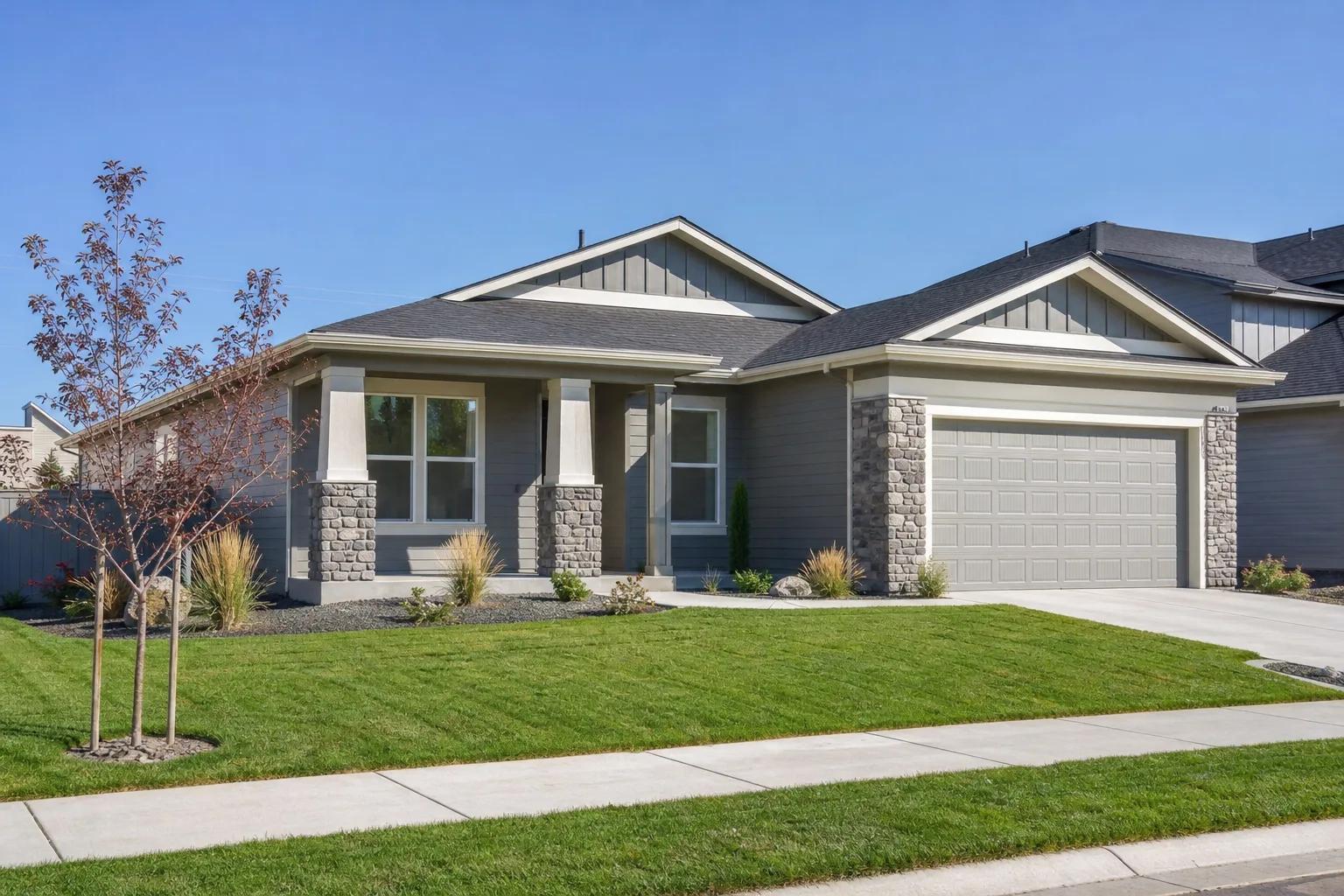
Buying is measured in weeks; building is measured in months, and the clock starts well before construction does. A purchase moves at the speed of an offer, an inspection, and a closing. A build starts with design, then engineering, then plan review and permitting through Ada County for Boise, Meridian, Eagle, Kuna, and Star, or Canyon County for Nampa, Caldwell, and Middleton, and only then does anything happen on site. Homeowners consistently underestimate the front half of that, because it is the part with no visible progress.
If you have a hard date, this is usually the deciding factor by itself. A lease ending, a job start, a school year, a sale that has already closed. None of those are things to negotiate with a construction schedule.
Financing works differently
Tap to expand
Financing works differently
A mortgage funds a house that already exists; a construction loan funds one that does not, and it behaves differently in almost every respect. With a purchase, the lender values a property they can inspect, funds it at closing, and you begin making full payments. With a construction loan, the appraisal is done against plans and specifications, the money is released in draws as stages are completed, and interest is usually charged only on the amount drawn so far. Many buyers use a construction-to-permanent structure that converts to a standard mortgage at completion.
The practical differences: you will need land or a down payment position the lender is comfortable with, the lender will review your builder as well as you, and you carry interest during construction while also, in many cases, paying to live somewhere else. Terms vary considerably between lenders, so talk to more than one early. The mechanics are set out in how construction loans work in Idaho.
What you give up by buying
Tap to expand
What you give up by buying
You inherit someone else's decisions, and the ones that matter most are the ones you cannot change. Layout, orientation, ceiling height, window placement, and lot are largely fixed. You can renovate a kitchen; you cannot easily move a house to face a different direction or add the natural light a plan was never designed for. Existing homes also carry their age: wiring, plumbing, roofing, and mechanical equipment all have a service life, and buying at the wrong point in that cycle means capital spending you did not plan for. None of this makes buying wrong. It means the purchase price is not the whole number, and a careful buyer prices the compromises rather than absorbing them by surprise.
What you give up by building
Tap to expand
What you give up by building
Time, certainty, and several hundred decisions. Building asks for months of your attention, most heavily during design and selections. You will choose things you have never thought about, from cabinet hardware to where the hose bibs go, and the projects that go well are the ones where the client engaged with that rather than deferring it. You also accept a range rather than a price at the start. A line-item budget with realistic allowances narrows that range early, and a fixed contract price closes it, but for the first stretch you are working with bands. If that is uncomfortable, it will stay uncomfortable.
There is also risk you do not carry as a buyer. Site conditions, weather, material lead times, and your own change of mind all sit inside a construction project. A good builder manages most of it. Nobody eliminates it.
The last thing you give up is optionality. When you buy, you can walk away at any point up to closing and lose an inspection fee. Once a build is underway you are committed in a way that is genuinely different: drawings are paid for, permits are issued, materials are ordered, and trades are scheduled. That commitment is not a reason to avoid building, but it is a reason to do the thinking at the front rather than halfway through, which is where the design and preconstruction phase earns its keep.
Side by side
Tap to expand
Side by side
| Buying existing | Building new | |
|---|---|---|
| Cost | Usually lower like-for-like | $250 to $400 per finished sq ft plus land |
| Timeline | Weeks | Months, including design and permits |
| Financing | Standard mortgage | Construction loan, drawn in stages |
| Layout | Someone else's | Yours |
| Condition | Age and deferred maintenance | New, under warranty |
| Decisions required | Few | Hundreds |
| Cost certainty at the start | One number | A range that narrows |
When buying is plainly the better answer
Tap to expand
When buying is plainly the better answer
Buy if any of the following is true, and do not let anyone talk you out of it. You need to be in a home within a few months. You want one number today and no possibility of it moving. You have found an existing home you actually like, on a lot you actually like, and the changes you would make are cosmetic. You have no interest in making hundreds of decisions and no time to make them well. Your budget works only if nothing goes wrong, which means you have no contingency, which means you should not start a construction project. Or you are not certain how long you will stay, since the effort of building pays off over years rather than months.
We say this to people in person regularly. A client who should have bought and built instead is unhappy for a year, and everyone involved knows it by month three.
There is a version of this that deserves its own mention, because it is common and nobody enjoys saying it out loud. If the only way your build works is by assuming nothing goes over allowance and nothing changes, you are not budgeting, you are hoping. Buying an existing home caps that exposure at inspection findings and the improvements you choose to make on your own timetable. That is a legitimate reason to buy, and it has nothing to do with whether you would enjoy a custom home.
When building is the better answer
Tap to expand
When building is the better answer
Build if you have looked at existing homes and keep hitting the same wall. That is the clearest signal we see. People who have toured twenty houses and found the same compromise in all of them are usually people who should build, because the thing they want is not in the existing stock. Building also wins when the lot matters more than the house, which is common in the foothills and on acreage where the view or the land is the point. It wins when your household has a genuinely unusual requirement, such as multigenerational living, a workshop, or single-level accessibility for the long term. And it wins when you would end up renovating a purchase so heavily that the combined cost approaches a new build anyway, at which point you are paying custom prices for a compromised result.
The middle option most people miss
Tap to expand
The middle option most people miss
A semi-custom home runs $225 to $300 per finished square foot, about $450,000 to $600,000 at 2,000 square feet excluding land, and it removes most of what makes building hard. You start from a plan that has already been drawn and built, adapt it to your lot and your household, and choose finishes. Design cost falls, the decision load falls sharply, and the schedule is more predictable because there are fewer unknowns in the drawings. You give up some freedom in the floor plan. For a lot of families that is a trade worth making, and it is why semi-custom homes sit between the two options rather than being a lesser version of one.
How to decide this month
Tap to expand
How to decide this month
Put a real number on both sides before you decide, because the comparison people make in their heads is almost always unfair to one option. For building: use how to budget for a new home to assemble land, site work, vertical construction, soft costs, allowances, and contingency into a total, or start with what it costs to build a house in Boise. For buying: take the three best existing homes you have actually seen and add what you would spend in the first two years to make each one work. Compare those totals, then weigh the timeline and financing differences against how much the layout matters to you. If the answer is buy, that is a good outcome and you have saved yourself a year. If it is build, get in touch and we will start with a line-item budget rather than a sales pitch.